
Best Kecak and Fire Dance in Bali
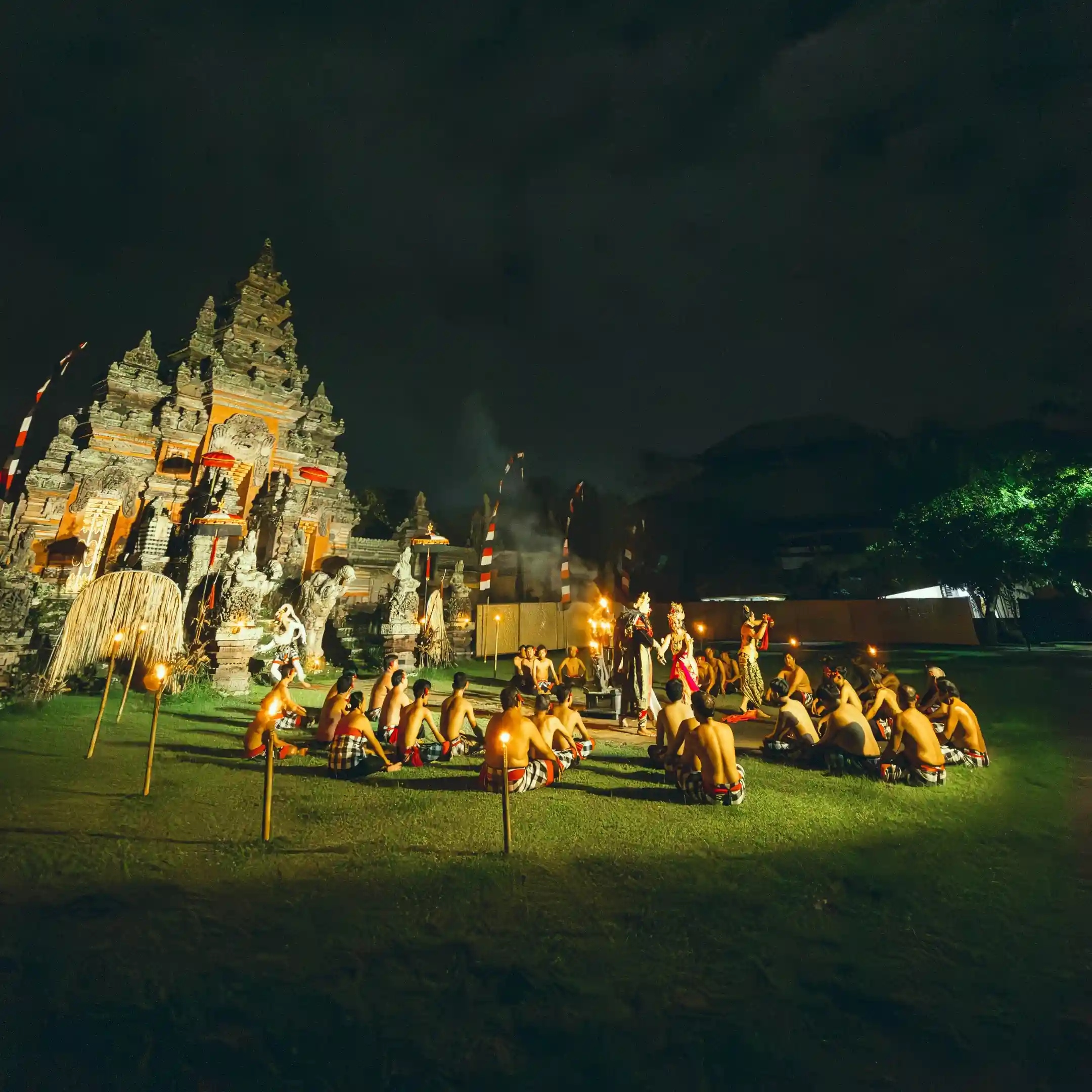
Bali is an island where culture is not only found in museums or historical sites. It lives in daily ceremonies, temple offerings, traditional music, village rituals, and performances that have been passed down through generations. For travelers visiting Bali for the first time, one of the most powerful ways to experience this cultural richness is by watching a Kecak and Fire Dance performance.
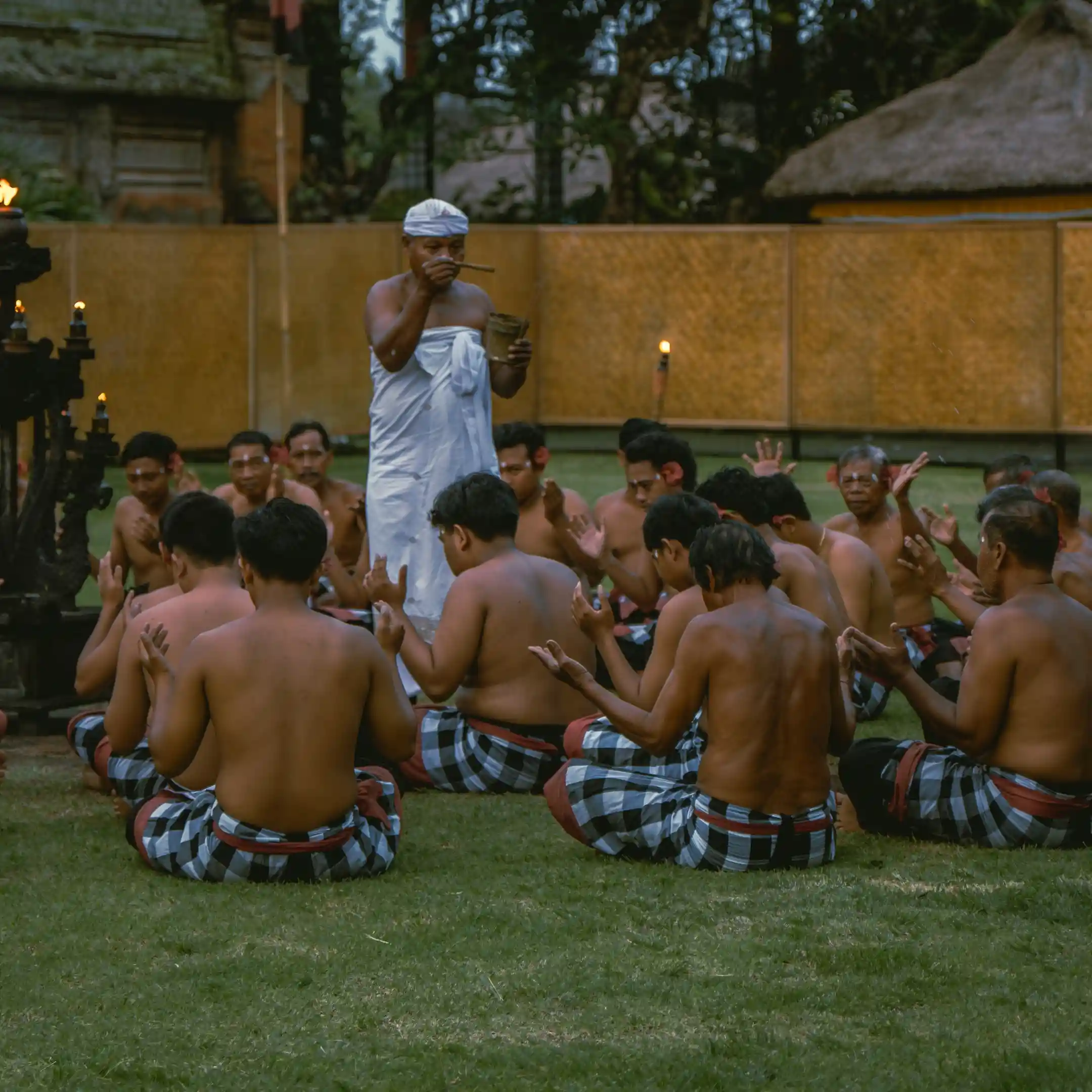
Kecak Dance is one of Bali’s most iconic cultural performances. Unlike many traditional dances that are accompanied by gamelan instruments, Kecak is performed with rhythmic chanting by a group of male performers sitting in a circle. The sound of “cak, cak, cak” builds a hypnotic atmosphere, while dancers perform scenes inspired by the Ramayana story. As the evening continues, the performance becomes more dramatic, often ending with a fire dance scene that leaves a strong impression on the audience.
While Kecak performances can be found in several places across Bali, watching it in a temple setting creates a different feeling. One recommended place to experience this is Puseh Temple Batubulan, where the performance is presented in a sacred village temple atmosphere. The setting gives the show a deeper sense of authenticity, especially for travelers who want more than just entertainment.
A Kecak and Fire Dance evening is not only about watching a show. It is about entering the rhythm of Balinese culture, listening to ancient chants, seeing mythology come alive, and feeling the spiritual atmosphere that makes Bali so unique.
Why Kecak Dance Is a Must-See Cultural Experience in Bali
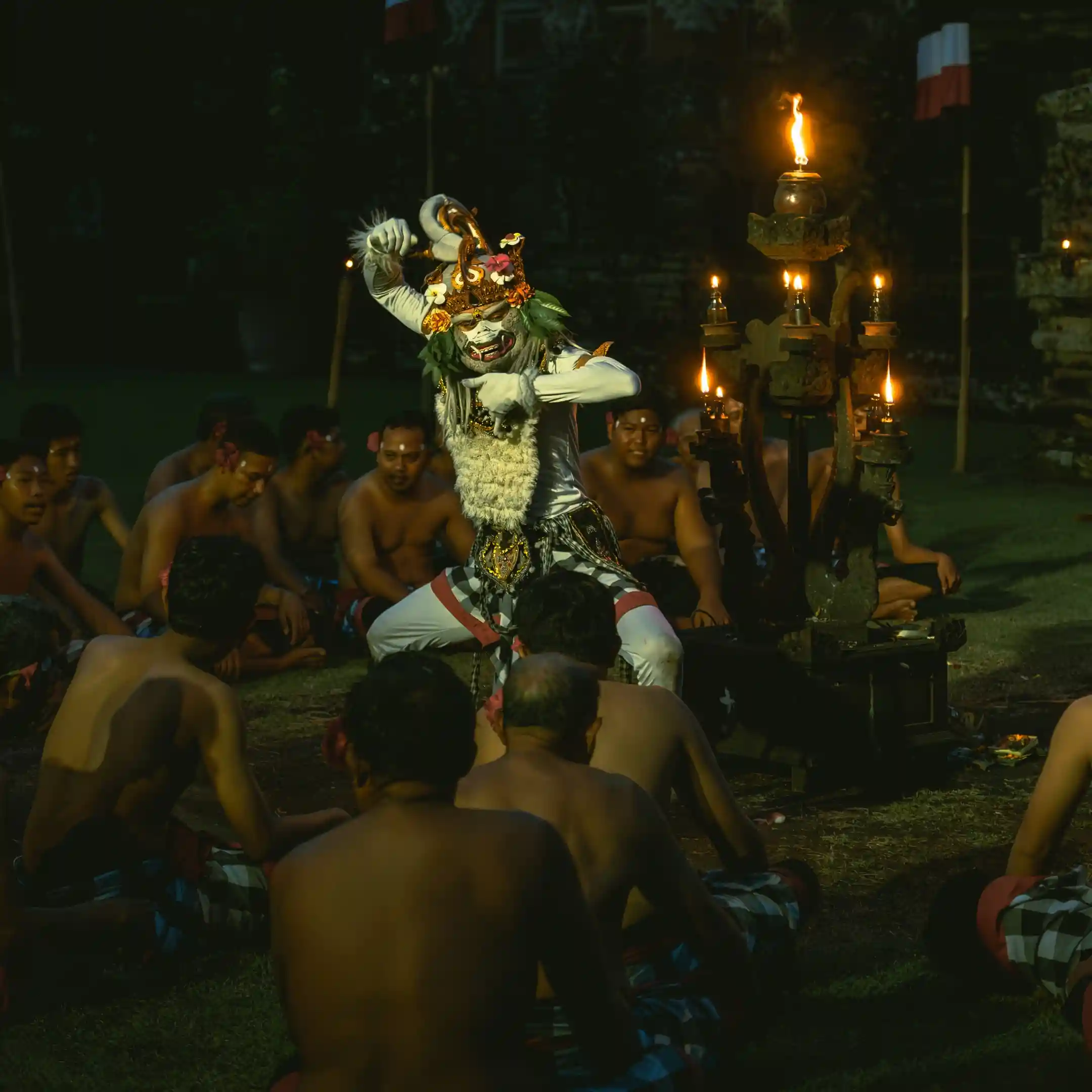
Kecak Dance is one of the most famous performances in Bali because it is visually powerful, easy to understand, and deeply connected to the island’s storytelling tradition. Even for visitors who are unfamiliar with Balinese culture, the performance is engaging from the beginning.
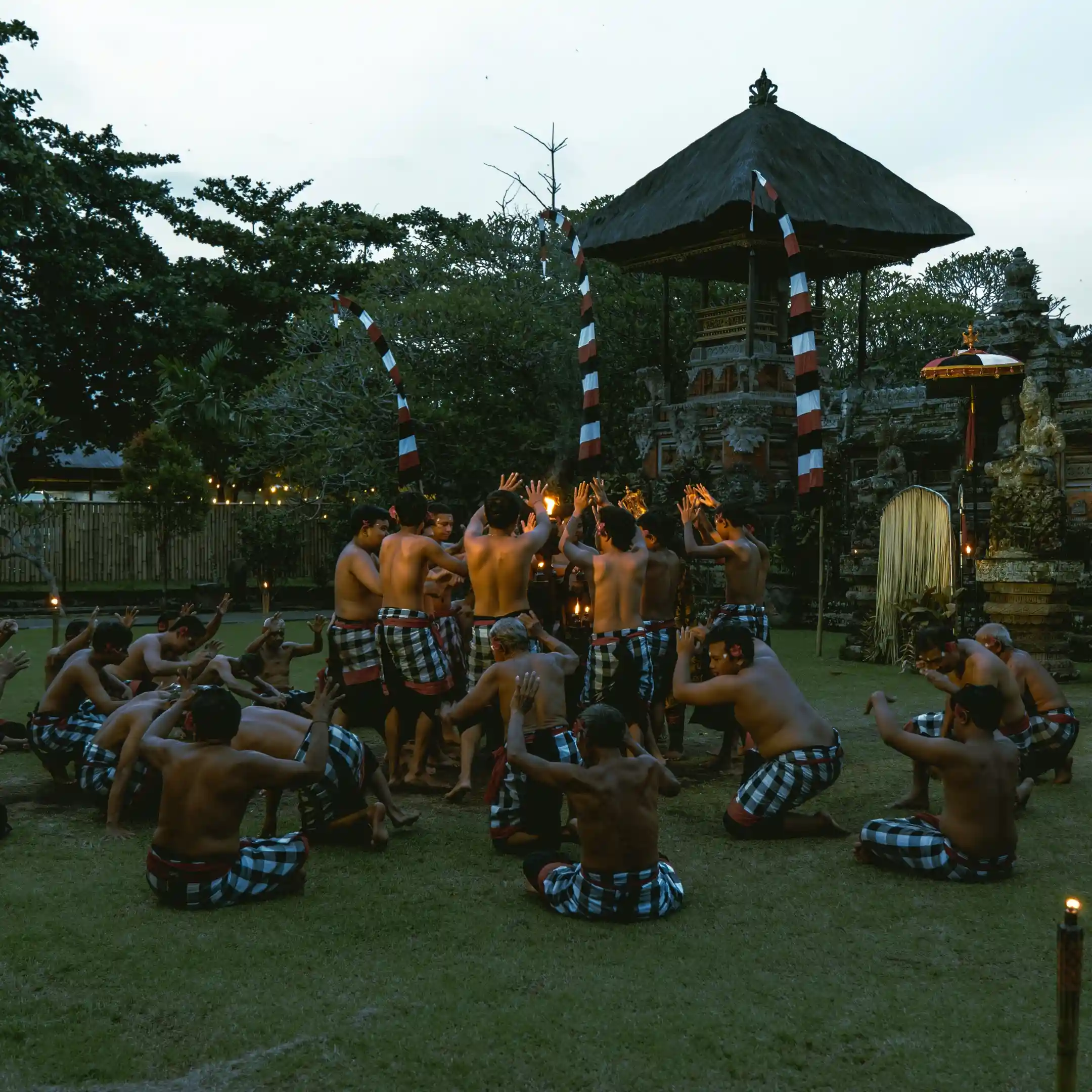
The main attraction of Kecak is the chanting. Dozens of performers sit in a circle, moving their arms and voices together in a repeating rhythm. The sound creates energy, tension, and emotion without the use of musical instruments. This makes Kecak very different from other Balinese performances.
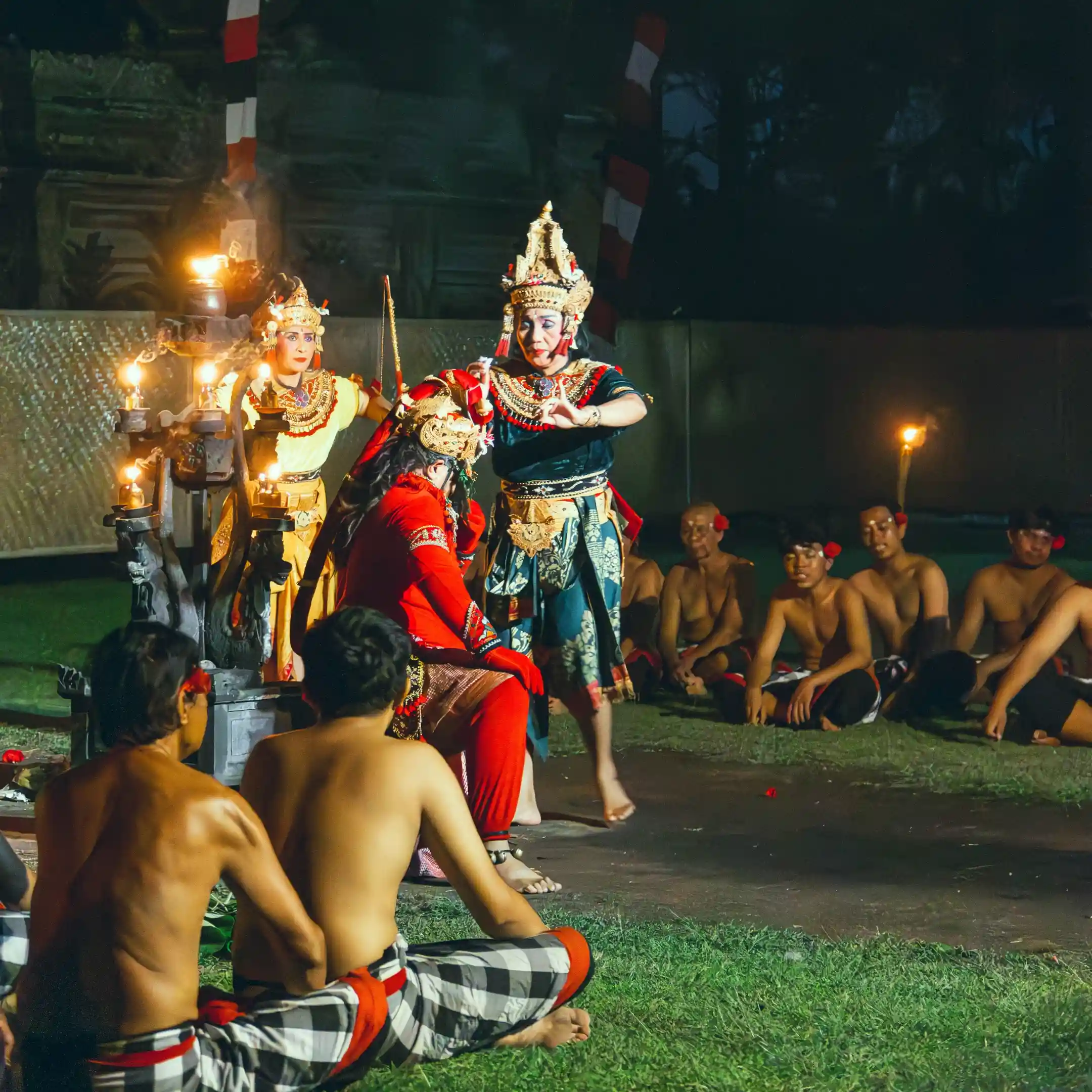
The story usually follows parts of the Ramayana, one of the great epics in Hindu tradition. It tells the story of Prince Rama, his wife Sita, his loyal brother Lakshmana, the monkey warrior Hanuman, and the demon king Ravana. Through expressive dance, costume, movement, and chanting, the performance brings this ancient story into a living stage experience.
For travelers, Kecak Dance is a perfect cultural introduction because it combines mythology, music, movement, drama, and visual beauty in one evening. It is also suitable for couples, families, groups, and solo travelers.
Understanding the Ramayana Story Behind the Performance
Rama and Sita
At the heart of the Kecak performance is the story of Rama and Sita. Rama is a noble prince known for his courage and sense of duty, while Sita represents grace, loyalty, and purity. Their relationship forms the emotional center of the story.
In the performance, viewers are introduced to the challenges faced by Rama and Sita during their exile in the forest. The story becomes more intense when Sita is taken away by Ravana, the powerful demon king.
Ravana and the Conflict
Ravana is one of the most dramatic characters in the Ramayana. His desire to take Sita creates the main conflict of the story. In Balinese performance, Ravana is often presented with strong gestures, bold costume details, and commanding movement.
The contrast between Rama’s noble character and Ravana’s dark power gives the performance its dramatic tension. Even if visitors do not understand every detail of the story, the emotions are easy to follow through movement, expression, and staging.
Hanuman and the Fire Scene
Hanuman, the white monkey warrior, is one of the most loved characters in the performance. He is loyal, brave, playful, and powerful. His role often brings energy and excitement to the show.
The fire dance scene is usually connected to Hanuman’s part of the story. This moment adds intensity and visual drama, making it one of the most memorable parts of the performance. The combination of chanting, movement, and fire creates a strong final impression.
What Makes a Temple Kecak Performance Special
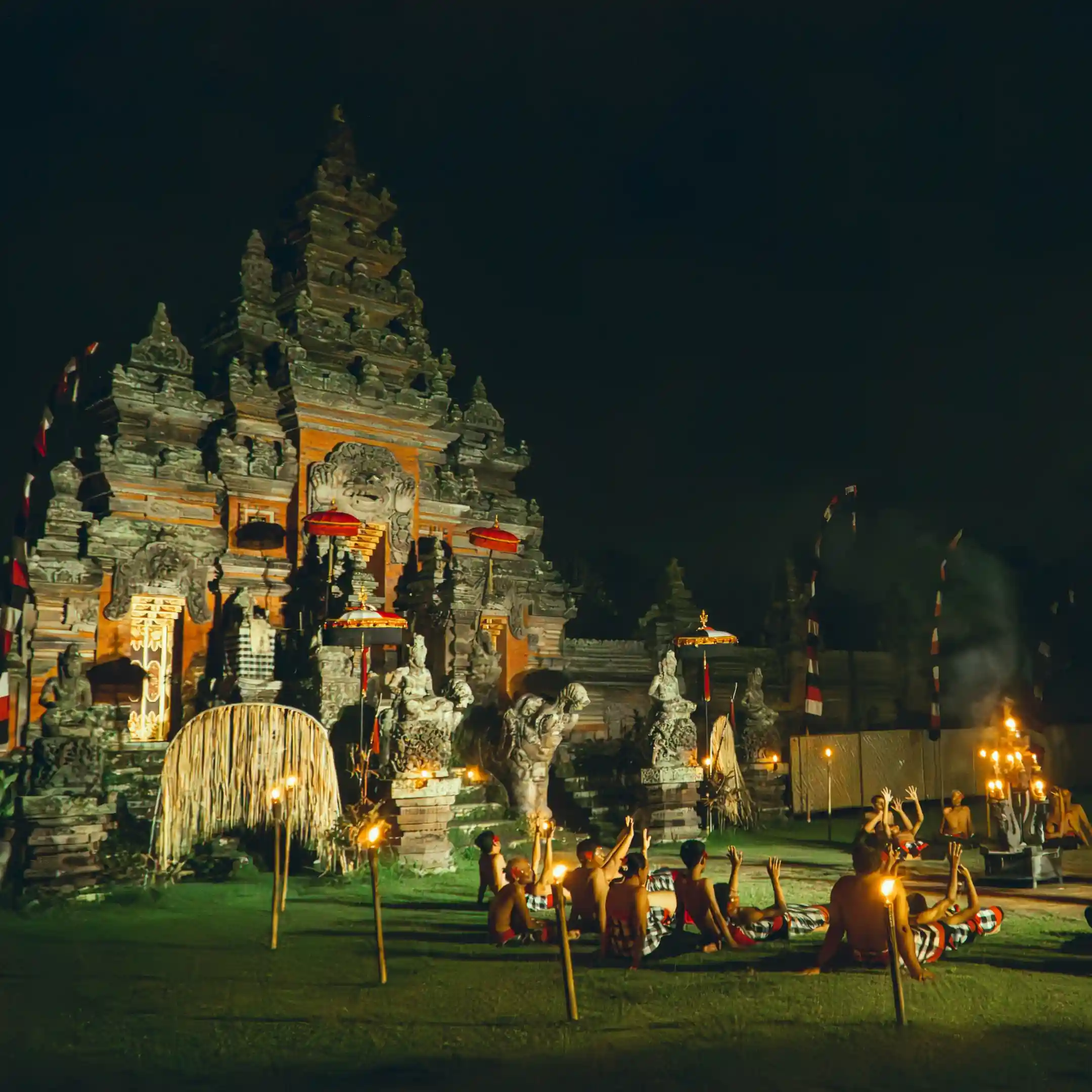
Watching Kecak Dance in a temple setting feels different from watching it on a regular stage. A temple is not only a performance venue; it is a sacred space connected to local spiritual life. This adds atmosphere and meaning to the evening.
At Puseh Temple Batubulan, the performance takes place in a setting that reflects Balinese village culture. The temple architecture, stone carvings, courtyard space, and evening light create a background that feels authentic and intimate. For international travelers, this kind of setting helps them feel closer to the cultural roots of the performance.
A temple atmosphere also encourages respect. Visitors become more aware that Balinese culture is not created only for tourism. It is part of a living tradition. The dance, costumes, chants, and story are connected to values, beliefs, and artistic practices that continue within local communities.
This is why a Kecak and Fire Dance performance in a temple can feel more meaningful. It is beautiful to watch, but it also gives travelers a glimpse into Bali’s deeper cultural identity.
Kecak and Fire Dance at Puseh Temple Batubulan
A Cultural Experience in Batubulan
Batubulan is known as one of Bali’s cultural villages, especially for stone carving, traditional arts, and performances. Located in Gianyar, between South Bali and Ubud, it is a convenient area for travelers who want to include culture in their Bali itinerary.
Puseh Temple Batubulan is one of the recommended places to watch Kecak and Fire Dance in this area. The performance offers a strong cultural atmosphere without feeling overly commercial. It is a good choice for visitors who want an evening activity that feels local, accessible, and memorable.
The location also makes it easy to combine with other nearby experiences. Travelers can enjoy an ATV ride, coffee plantation visit, temple stop, art village tour, or dinner before or after the performance.
Performance Atmosphere
The atmosphere of the show is one of its strongest elements. As the evening begins, visitors gather around the performance area while the temple surroundings create a calm and traditional setting. When the chanting starts, the energy slowly builds.
The circular formation of the Kecak performers draws attention immediately. The repeated chanting creates a rhythm that feels almost meditative at first, then becomes more intense as the story develops. Dancers enter the stage in detailed costumes, each character bringing a different mood and movement style.
The fire dance scene adds excitement toward the end. The glow of fire against the evening atmosphere makes the performance feel dramatic and unforgettable. It is the kind of experience that stays in the memory long after the show ends.
Why This Performance Feels Different
What makes the Kecak performance at Puseh Temple Batubulan different is the combination of cultural storytelling and sacred atmosphere. The show is not only about visual entertainment. It feels connected to place, community, and tradition.
The temple setting gives the performance a more grounded feeling. The audience is not separated from Bali’s cultural environment; they are sitting inside it. This makes the experience especially valuable for first-time visitors who want to understand the island beyond beaches and resorts.
Things to Do Before Watching the Kecak Dance
Explore Batubulan’s Cultural Side
Before the performance, travelers can explore the Batubulan area. The village is known for traditional stone carving, and many workshops display statues, temple ornaments, and Balinese decorative art. This gives visitors a chance to see another side of local craftsmanship.
Batubulan is also known for traditional performances and village-based cultural activities. Spending time in the area before the show helps create a fuller cultural experience.
Visit a Coffee Plantation
A coffee plantation visit can be a relaxing activity before the evening performance. Travelers can learn about Balinese coffee, taste herbal teas, try luwak coffee, and enjoy a peaceful garden setting. This works especially well for visitors who want a light afternoon experience before the show.
Enjoy an ATV Adventure Nearby
For travelers who want a more active day, an ATV adventure in the Batubulan area can be combined with Kecak Dance in the evening. This creates a nice contrast between daytime adventure and nighttime culture.
After riding through jungle trails, rice fields, rivers, caves, and muddy tracks, watching a traditional performance becomes a calm and meaningful way to end the day.
Have Dinner After the Show
Since the Kecak performance usually takes place in the evening, dinner afterward is a natural addition. A nearby restaurant such as Jambe Boga Sari can be a comfortable place to enjoy local flavors after the cultural show.
Combining Kecak and dinner makes the evening feel complete, especially for couples, families, and small groups.
Best Time to Watch Kecak Dance in Bali
Kecak Dance is usually performed in the evening because the atmosphere becomes more dramatic as the sun goes down. The combination of twilight, chanting, costumes, and fire creates a stronger visual effect than a daytime performance.
The best time to arrive is at least 20–30 minutes before the show begins. Arriving early gives you time to find seating, understand the setting, take photos respectfully, and settle in before the performance starts.
Kecak Dance can be enjoyed year-round. During the dry season, the weather is generally more comfortable for outdoor performances. During the rainy season, the experience can still be enjoyable, but travelers should be prepared for possible weather adjustments.
For visitors with a full-day itinerary, it is best to plan daytime activities nearby and keep the evening reserved for the performance. This avoids rushing and makes the experience more enjoyable.
Tips for Watching Kecak and Fire Dance
Dress respectfully, especially when watching a performance in a temple area. Lightweight, modest clothing is recommended. A sarong may be required or suggested depending on the venue’s rules.
Arrive early to get better seating. Popular performances can attract many visitors, especially during high season.
Bring a camera or phone, but be respectful when taking photos or videos. Avoid blocking other guests’ views and do not disturb the performers.
Do not walk across the performance area once the show has started. Stay seated and follow staff instructions.
Keep small cash for tickets, parking, drinks, or personal expenses.
If traveling with children, explain the fire scene in advance. The performance is generally family-friendly, but the fire section can feel intense for very young children.
Respect the temple environment. Speak quietly, avoid inappropriate behavior, and remember that the venue may still be connected to local religious life.
Plan your transport after the show. Evening traffic can vary, so having a driver or arranged pickup makes the experience smoother.
Suggested Half-Day Cultural Itinerary
Start your afternoon with a visit to a coffee plantation or local craft village around Gianyar. Enjoy a relaxed tasting experience or browse handmade products while learning about Balinese local culture.
Continue to Batubulan before evening and arrive at Puseh Temple Batubulan at least 20 minutes before the Kecak and Fire Dance begins. Take your seat, enjoy the temple setting, and watch the performance as the chanting and story unfold.
After the show, continue with dinner nearby. This creates a simple but memorable evening itinerary that combines local discovery, cultural performance, and Balinese dining.
For a more adventurous version, begin the day with an ATV ride, clean up afterward, relax with coffee tasting, and end the evening with Kecak Dance and dinner.
Why First-Time Visitors Should Watch Kecak Dance
For first-time visitors, Kecak Dance is one of the easiest and most powerful ways to connect with Balinese culture. You do not need deep knowledge of history or religion to enjoy it. The rhythm, costumes, movement, and fire create an experience that speaks visually and emotionally.
It is also a good reminder that Bali is more than a tropical holiday destination. Behind the villas, cafés, resorts, and beaches, the island has a rich cultural foundation that continues to shape daily life.
Watching Kecak Dance helps travelers understand why performance, ritual, storytelling, and community are so important in Bali. It adds meaning to the journey and creates a memory that feels different from ordinary sightseeing.
A Kecak and Fire Dance performance is one of the most memorable cultural experiences in Bali. Through rhythmic chanting, expressive dance, Ramayana storytelling, dramatic fire scenes, and temple atmosphere, it offers travelers a powerful introduction to the island’s artistic and spiritual identity.
For visitors looking for one of the best places to watch Kecak Dance in Bali, Puseh Temple Batubulan is a strong recommendation. Its sacred setting, cultural village atmosphere, and convenient location make it a meaningful evening experience, especially for travelers who want something authentic and easy to include in their itinerary.
Whether you combine it with an ATV adventure, coffee plantation visit, local craft tour, or dinner nearby, a Kecak and Fire Dance evening brings depth to your Bali holiday. Come with curiosity, watch with respect, and let the sound of the chant become one of the moments you remember most from the island.